Linyanti and Savuti
Private concessions between Chobe and the Okavango, accessible only by charter flight, where African wild dogs and elephants concentrate far from mass tourism.
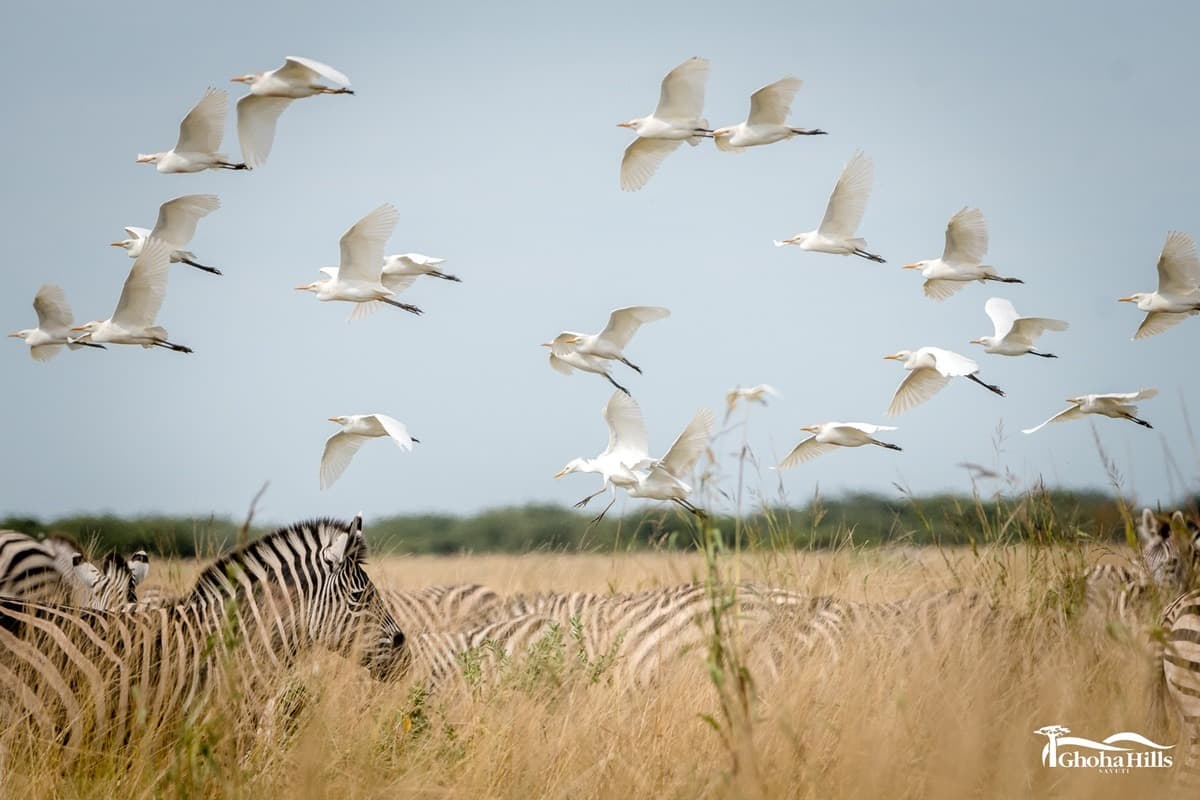
In northern Botswana, between Chobe National Park to the east and the Okavango Delta to the west, stretches a mosaic of private concessions we group under the name Linyanti and Savuti. These lands, leased by the State to operators under long-term contracts, cover nearly 250,000 hectares divided between the Linyanti concession, Selinda, the Kwando reserve and the Savuti sector, integrated into Chobe National Park. Our team in Maun sends travellers here each year seeking wildlife density comparable to Moremi, but without the vehicles clustering around the big cats.
The geography becomes clear once on the ground. To the north, the Linyanti River forms the border with Namibia and the Caprivi Strip, lined with riparian forests of mopane and acacia. In the centre, the Savuti channel connects, or rather connected, the Linyanti marshes to the Mababe depression. This watercourse has a singular hydrological history: dry from 1982 to 2008, it resumed flowing without an exceptional flood, simply through a realignment of the region's tectonic faults. Today, it alternates between periods of flow and dry phases, which changes wildlife distribution from season to season.
The Savuti landscapes resemble open savanna dotted with basaltic hills, the Gubatsa Hills, rising a hundred metres above the plain. They feature bushmen rock paintings, modest but authentic, attributed to the ancestors of the San who roamed this area before colonial borders were established. The Savuti marsh, once a lake, is now covered in grassland, where buffalo herds can exceed 500 head during the dry season.
Linyanti, more densely wooded, offers another face. Mopane forests dominate, interspersed with permanent lagoons fed by the river. This is where Africa's highest concentrations of elephants gather during the dry season, with estimates exceeding 15,000 individuals on the concession between July and October. Packs of African wild dogs, an endangered species with fewer than 7,000 individuals across Africa, have established several dens in the Kwando and Selinda sector. Our guides typically spot their tracks early in the morning on sandy paths, and we follow the packs hunting at sunrise and sunset.
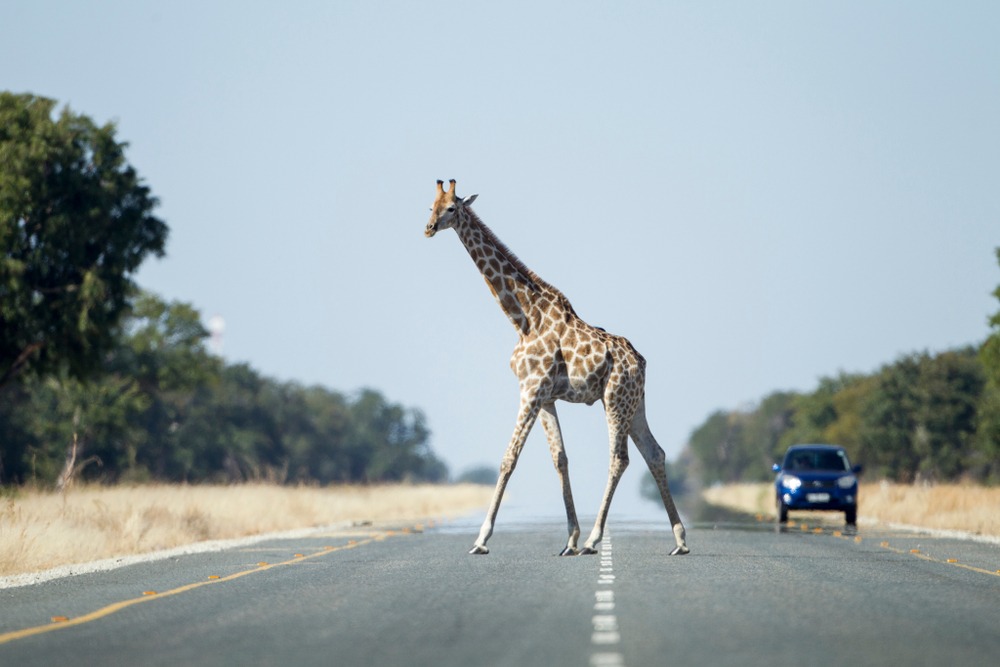
Another asset of this region lies in its economic model. Since concessions are closed to independent tourism, only guests of camps located there can move freely. Concretely, this means that over an area the size of a French department, we rarely encounter more than two or three other vehicles in a day of safari. The camps themselves are deliberately small, usually six to twelve tents, with staff trained in in-depth guiding: accompanied walks, night drives, observation from hides near water points. No paved roads cross the area, and access is by charter flight in a Cessna from Maun, approximately 45 minutes, or from Kasane, 30 minutes.
In human terms, the region is largely uninhabited. The nearest villages, Kachikau and Parakarungu, are found to the northeast, on the border of Chobe, and are home to Subiya and Yei communities whose economy is based on fishing, livestock and increasingly employment in the lodges. Our agency works with several camps that donate a share of their revenues to community trusts in these villages, a model we prioritise when selecting accommodation.
Must-see highlights
Savuti channel and its elephants. Along the channel reactivated since 2008, elephants come to drink in late afternoon in groups of 30 to 80 individuals. Concentration peaks between August and October, when alternative water points dry up.
African wild dog packs at Selinda. Active dens between June and September allow observation of hunts at dawn. Our guides track four packs identified by radio collar on the concession.
Rock paintings of the Gubatsa Hills. On the basaltic outcrops in the heart of Savuti, a few panels of bushmen paintings represent eland, sable antelope and human figures. 45-minute walk guided by a guide.
Linyanti lagoon by mokoro. On the permanent channels of the river, some camps offer traditional canoe outings, a gentle alternative to 4x4s. Hippopotamuses, kingfishers and crocodiles can be observed at close range.
Savuti marshes and its lions. The coalitions of male lions in Savuti, studied since the 1990s, regularly hunt subadult elephants at the end of dry season, rare behaviour documented here.
When to visit
The dry season, from May to October, represents the most productive window for safari in this region. As temporary pans evaporate, wildlife concentrates on the Linyanti and Kwando rivers and the Savuti channel. Daytime temperatures range between 22 and 28°C in June-July, with cool nights dropping to 5°C in open tents. September and October mark the peak of animal observation but also heat, with frequent daytime highs of 38-40°C in the afternoon.
From November to April, the rainy season transforms the landscape. Rainfall remains moderate, approximately 550 mm annually concentrated over these five months, but disperses wildlife and renders certain tracks impassable. Several Linyanti camps close from January to March. This period nonetheless has its advocates: vegetation is green, migratory birds present, herds calve in December, and lodge rates at open camps drop by 30 to 40%. We recommend it to travellers already familiar with African safari, who accept more unpredictable wildlife viewing.
Practical advice
We recommend a minimum of three nights in the region, ideally four, to offset the cost of the charter flight, approximately 350 USD per person one-way from Maun, and fully benefit from the camps' guiding expertise. A single night makes little sense given the logistics. Linyanti and Savuti almost systematically combine with the Okavango Delta, earlier in the itinerary, and with Chobe or Victoria Falls, later. A classic ten- to twelve-day formula pairs Maun, three nights in the delta, three in Linyanti or Savuti, then road or air transfer to Kasane and Chobe.
Comfort levels in these concessions are high: spacious tents on platforms, private bathrooms, solar electricity, careful cuisine. The most accessible camps cost around 800 USD per person per night in full board with safaris included; the most exclusive exceed 2,500 USD. This region suits contemplatives, photographers and experienced safari enthusiasts seeking close observation of predators and tranquility. It is less suited to families with young children under eight, as several camps apply this age restriction, and tight budgets, for which we instead recommend Moremi or Chobe with mobile camping.