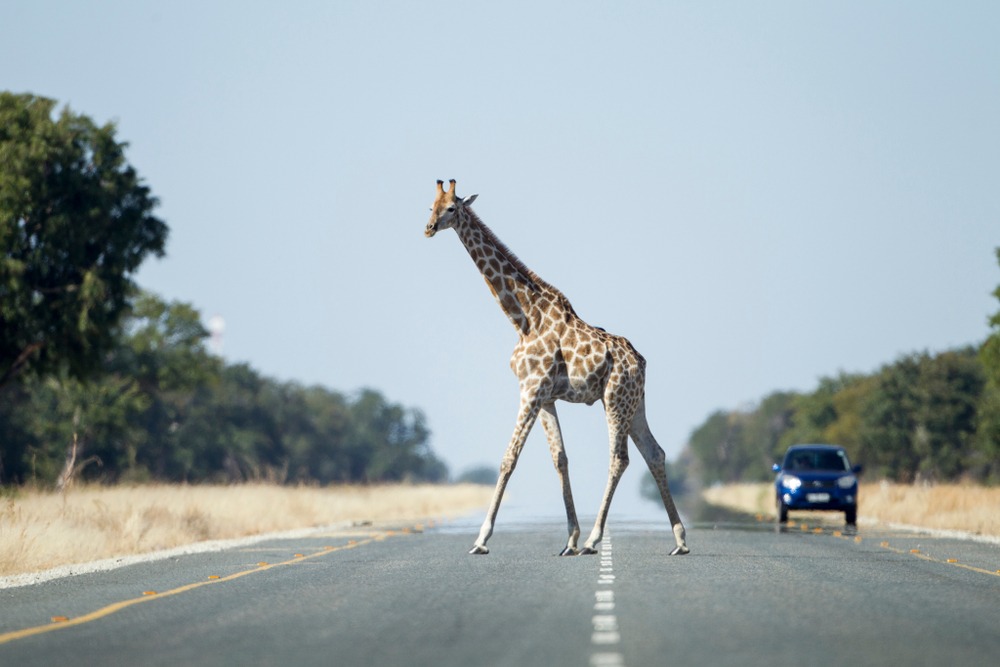
Tuli Block
A private strip of land along the Limpopo River, Tuli Block offers walking or horseback safaris among baobabs, granite koppies and 1,500 elephants.
Tuli Block forms a narrow band of land, stretching some 350 kilometres, wedged between the Limpopo River to the south and the Zimbabwe border to the east. This singular geographical configuration stems from colonial boundary-drawing: in the late 19th century, Cecil Rhodes obtained this stretch of territory to build a railway linking Cape Town to Cairo. The project never came to fruition, and the land remained in private farming hands. Today, these concessions have been consolidated into wildlife reserves, the principal being the Northern Tuli Game Reserve, which covers approximately 72,000 hectares around Pont Drift.
The landscape bears little resemblance to the Okavango Delta or Chobe plains. Here, the soil is red and rocky, scattered with koppies—those granite hills that rise from the bush. Baobabs dominate the vegetation, some reaching eight metres in diameter, accompanied by mopane, acacias and jujubes. The Limpopo River, dry for much of the year, holds a few permanent water holes that concentrate wildlife during the dry season. The climate is hotter and drier than in the north: rain falls mainly between December and March, the rest of the year remaining dusty.
Wildlife has adapted to this aridity. Tuli harbours one of the highest elephant densities on private land in southern Africa, some 1,500 individuals according to recent counts, often in large herds descending to drink at the Limpopo. You'll also spot eland—Africa's largest antelope—oryx, kudu, leopards and brown hyenas, harder to spot than their spotted cousins. Lions are present but in low numbers. Birdwatchers can count over 350 species, including the Verreaux's eagle nesting in the sandstone cliffs.
Tuli is also a draw for ancient history enthusiasts. Some 30 kilometres south, on the South African bank of the Limpopo, Mapungubwe has been designated a UNESCO World Heritage site: this is where the first kingdom of southern Africa flourished between the 11th and 13th centuries, predating Great Zimbabwe, with an economy built on gold and ivory trade to the Swahili coast. On the Botswanan side, you'll find San rock engravings at several sites, notably around Solomon's Wall, a formation of black dolerite cutting across the Motloutse River.
The region is sparsely populated. The nearest villages, like Bobonong or Mathathane, survive on extensive livestock farming and small-scale cultivation. Tuli Block functions essentially as a private reserve economy: the few lodges were long run by farming families who converted their farms into wildlife concessions in the 1980s and 1990s. This recent history explains the intimate character of the experience: only three or four lodges operate in the main reserve, with a total capacity rarely exceeding 80 beds.
For our team, Tuli Block represents a very different safari experience from what we offer in the north. Private concessions permit what national parks forbid: walking in the bush with an armed guide, night drives with a spotlight, horseback approaches for experienced riders. It's also a convenient entry point from Johannesburg, opening possibilities for combined circuits that other, more isolated regions of Botswana don't allow.
To discover
Walking safari in Northern Tuli. Two to three hour walks at dawn with an armed guide, tracking elephants and reading the signs in the red sand of the Limpopo. Private concessions permit an approach that the northern national parks forbid.
The giant baobabs of Motloutse. Along the Motloutse River, several baobabs exceed 1,000 years old and still serve as landmarks for local herders. Some are hollowed at their base by elephants extracting fibres during the dry season.
Solomon's Wall and rock engravings. A 30-metre-high wall of black dolerite cutting across the Motloutse River, the eroded remnant of a volcanic intrusion. Nearby, several panels of San engravings depicting giraffes and antelopes.
Horseback safari between Limpopo and koppies. Tuli is one of the few regions in southern Africa where you can approach elephants and eland on horseback, riding mounts accustomed to wildlife. Reserved for experienced riders, on half-day to multi-day outings.
Mapungubwe site. 30 kilometres south, on the South African bank, the first kingdom of southern Africa (11th–13th centuries) listed as a UNESCO site. The small museum displays the Mapungubwe golden rhinoceros, discovered in a royal burial.
When to go
The dry season, April to October, remains the best time for Tuli Block. Between May and August, daytime temperatures hover around 23 to 26°C, with cool nights dropping to 5°C in June and July: bring a fleece and hat for early morning sorties. Wildlife concentrates around the Limpopo's permanent water holes, making sightings easier. September and October are the hottest months before the rains, with peaks reaching 38°C in the afternoon, but also the months when animal density is highest around the rivers.
The rainy season, November to March, transforms the landscape: the bush turns green, migratory birds arrive, antelopes give birth. Rainfall remains moderate, around 350 mm per year concentrated over these four months, but thunderstorms in late afternoon can make black earth tracks impassable for a few hours. December and January are hot and humid, with temperatures often exceeding 35°C. This season suits birdwatchers and photographers seeking more contrasted light, less so families with young children.
Practical tips
Plan for two to four nights on the ground. Less than that, the journey doesn't justify itself; beyond that, activity diversity reaches its limits. The most practical entry is by road from Johannesburg, some 530 kilometres to the Pont Drift border post, roughly six to seven hours' drive. At Pont Drift, you cross the Limpopo on foot or by cable car depending on water levels, and a concession vehicle collects travellers. Light charter flights from Johannesburg or Polokwane also exist, cutting the journey to 90 minutes.
The most logical combination pairs Tuli with northern Botswana at the start or end of a circuit: Tuli doesn't link easily by road to the Okavango Delta, Chobe or Moremi, which lie over 1,000 kilometres away. Our team prefers to link Tuli with a Kalahari stay or an extension into South Africa's Kruger, geographically closer. Comfort in the lodges is high, with only four to eight tents or rooms, experienced guides and genuine attention to the nature of the experience. The region suits travellers who've done a classic safari and seek something else: walkers, riders, archaeology enthusiasts, photographers. Less suited to families with children under 12, the minimum age often required for walking activities.