Okavango Delta
Hidden in the heart of the Kalahari Desert, in northwestern Botswana, the Okavango Delta is home to several hundred animal species. Elephants, buffalo, white rhinoceros, hippopotamus, wild dogs and lions from the region find refuge there during the dry season.
Hidden in the heart of the Kalahari Desert, in northwestern Botswana, the Okavango Delta is home to several hundred animal species. Elephants, buffalo, white rhinoceros, hippopotamus, wild dogs and lions from the region find refuge there during the dry season.
Through a complex mechanism, the Okavango Delta reaches its highest water level during the winter months. Water levels then decrease considerably during the rainy season. This curious phenomenon gives rise to a significant annual migration of animals in the region.
The Okavango Delta offers its visitors some 15,000 km² of lush vegetation growing along the waters. It does not flow into the sea and thus ranks among the rare inland deltas on the planet.
History: the remarkable journey of water
The Okavango Delta originates from the river of the same name. This river rises in Angola, crosses the Caprivi Strip in Namibia before expanding and dividing across the Kalahari plains.
During periods of major flooding, the water level of the Okavango River upstream of the Delta increases considerably. The water then takes several months to reach the Delta due to its low flow rate. It generally arrives during the dry season.
The areas around the Okavango Delta are flooded during this time of year. Drawn by the water, animals from the region migrate to this location during the dry season.
After its remarkable journey, the Delta's water becomes lost in the desert and disappears through evapotranspiration.
Discovering the Okavango Delta
The Okavango Delta is part of the Kalahari Desert. A portion to the east is integrated into the Moremi Reserve.
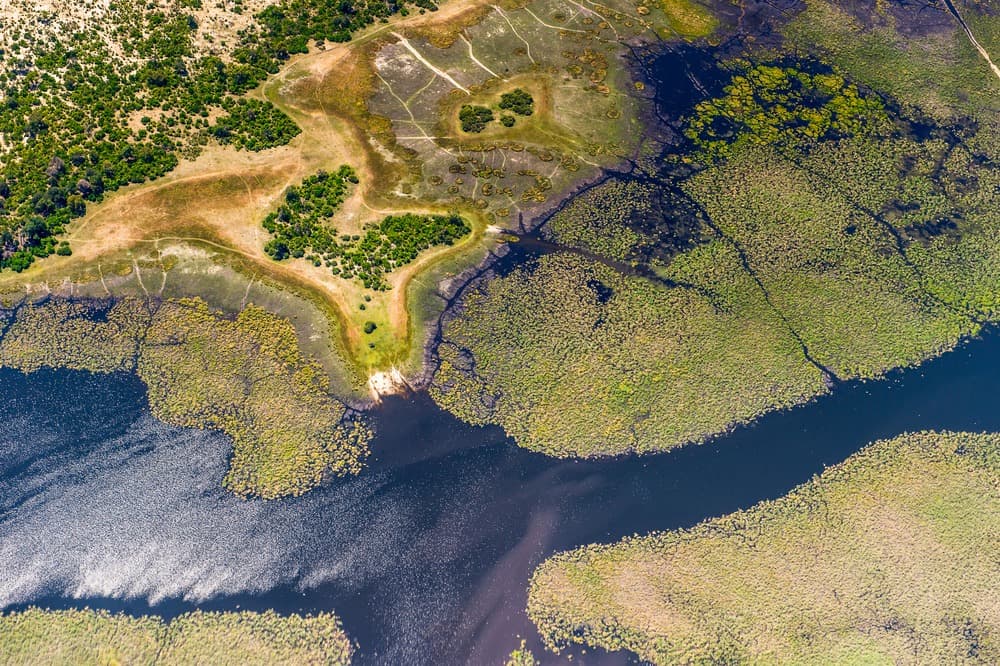
The landscape of the Okavango Delta depicts rivers, marshes, lagoons and thousands of islands surrounded by abundant vegetation. The largest and most famous of these is undoubtedly Chief's Island.
The vegetation in the surrounding area is highly diverse and seems to change from one part of the Delta to another. On the shoreline, you can observe Mopane and Baikiaea forests in some areas. In other parts, Acacia, Terminalia or Boscia trees stand here and there along verdant grasslands. Looking in another direction, you suddenly notice some semi-arid zones.
Herbaceous plants carpet the marshes and islands of the Delta, while trees such as palms provide shelter for the region's countless birds. From a distance, you can see that some small islands have no vegetation at all. Your guide will explain that the soil is too alkaline for anything to grow on these small parts of the marshland.
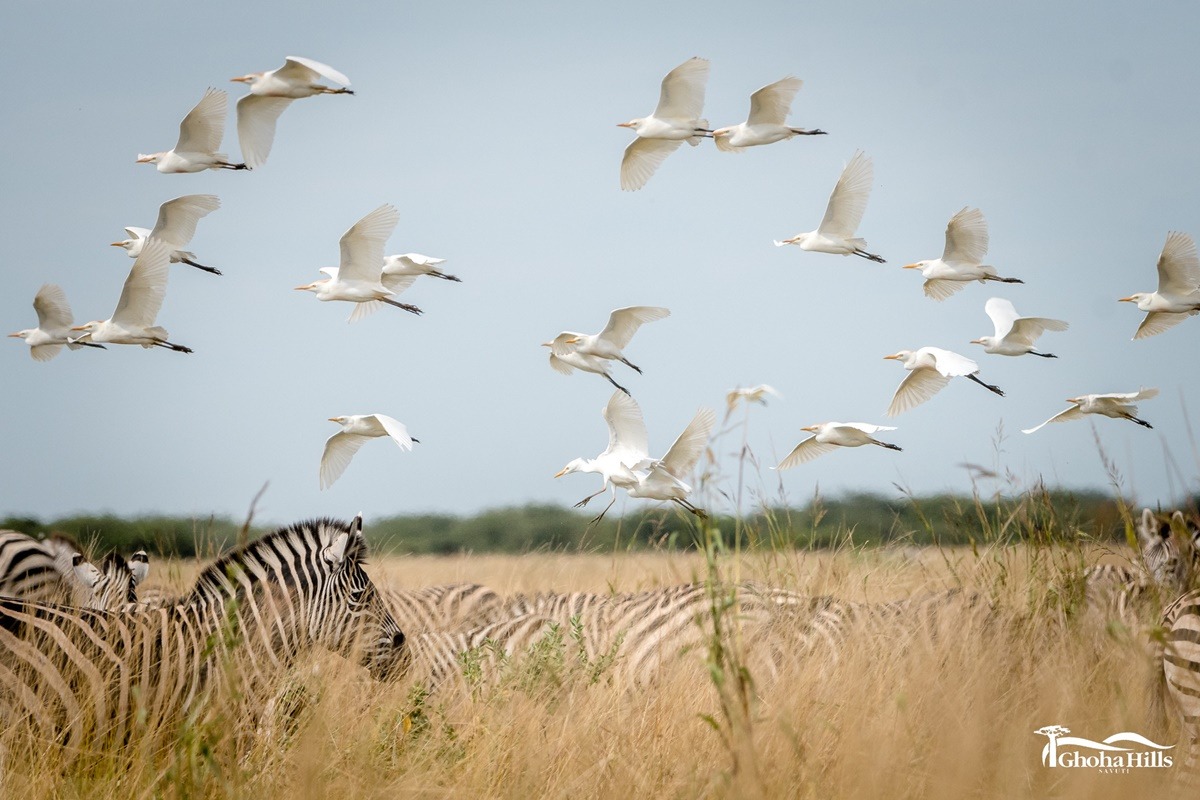
Animals of all kinds take refuge in this part of the region during periods of major flooding to quench their thirst. Birds, mammals, reptiles, amphibians and fish live here in perfect harmony. Approximately 500 bird species, 130 mammal species, 89 fish species and nearly 150 reptile and amphibian species are found here.
Africa's most endangered species find safe shelter here. It is therefore not surprising to see white rhinoceros, cheetahs, crowned cranes or rufous-bellied herons watching their visitors without being too concerned. Rare animal species such as the quail-finch, black-cheeked lovebird, African wild dog, leopard, Pelusios bechuanicus or Okavango mud turtle have made this their home. African tiger fish and catfish swim in the depths of these waters. Nile crocodiles also migrate from neighboring regions to the "Panhandle", in the northern part of the Delta.
Staying near the Okavango Delta
The main access point to the Okavango Delta is Maun, a town located in the heart of Botswana's savanna.
As you approach the destination, you witness the meeting of two worlds: the lush vegetation growing around the Okavango Delta contrasting with the sandy and arid surroundings of the desert.
Once there, nothing beats a mokoro excursion to explore and discover the wonders of the Okavango Delta. This traditional canoe, guided by local people, glides silently between tall grasses and water lilies along the Delta's calm crystalline waters.
During navigation, you can observe birds in flight and watch herds cross a river on the opposite bank.
Certain parts of the Delta and its surroundings can be explored by vehicle or on foot to get closer to the animals. Watching an elephant or rhinoceros wade through the water, lions gather, giraffes, buffalo or antelope drink, hippopotamuses swim—it is a thrilling spectacle that brings both excitement and serenity.
Other parts are difficult to access and are only reachable by plane or observed from a hot air balloon. The view over the entire region is then breathtaking.
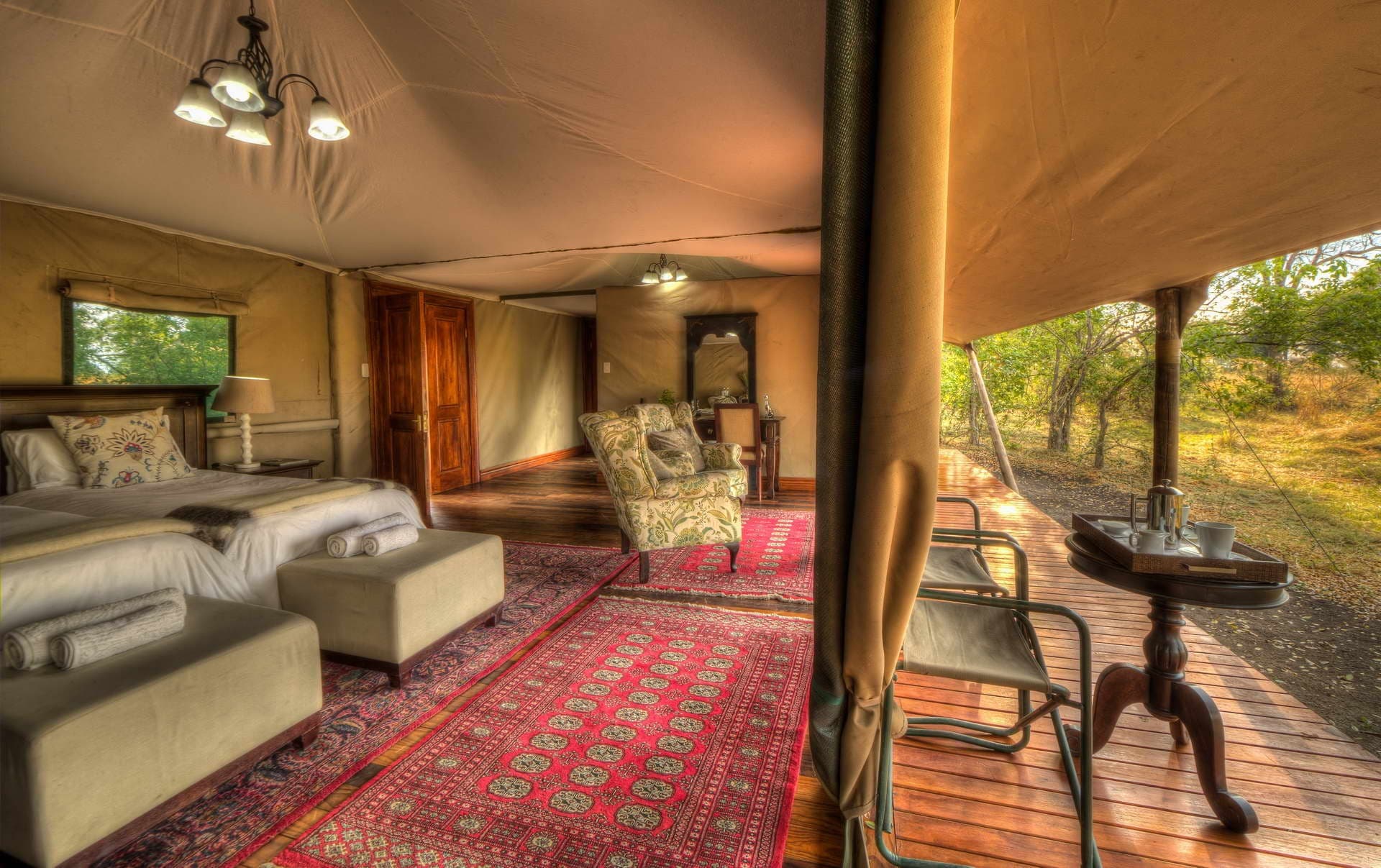
Campsite lodges on the shores of the Delta offer an extraordinary nocturnal experience in the heart of nature. Meeting the local population, welcoming and warm, fully immerses you in the country's culture.
Practical information
There are two access routes to the Okavango Delta. The first involves landing at Windhoek Airport, the capital of Namibia. From there, you can rent a car to head to Maun, Botswana. This detour allows you to discover the wonders of Namibia and combine several safaris.
You can also fly directly to Maun Airport in Botswana.
When to visit?
The best time to visit the Okavango Delta would be towards the end of the dry season, between June and September. Animals will have had time to migrate to the region to quench their thirst. They will be all the easier to observe.